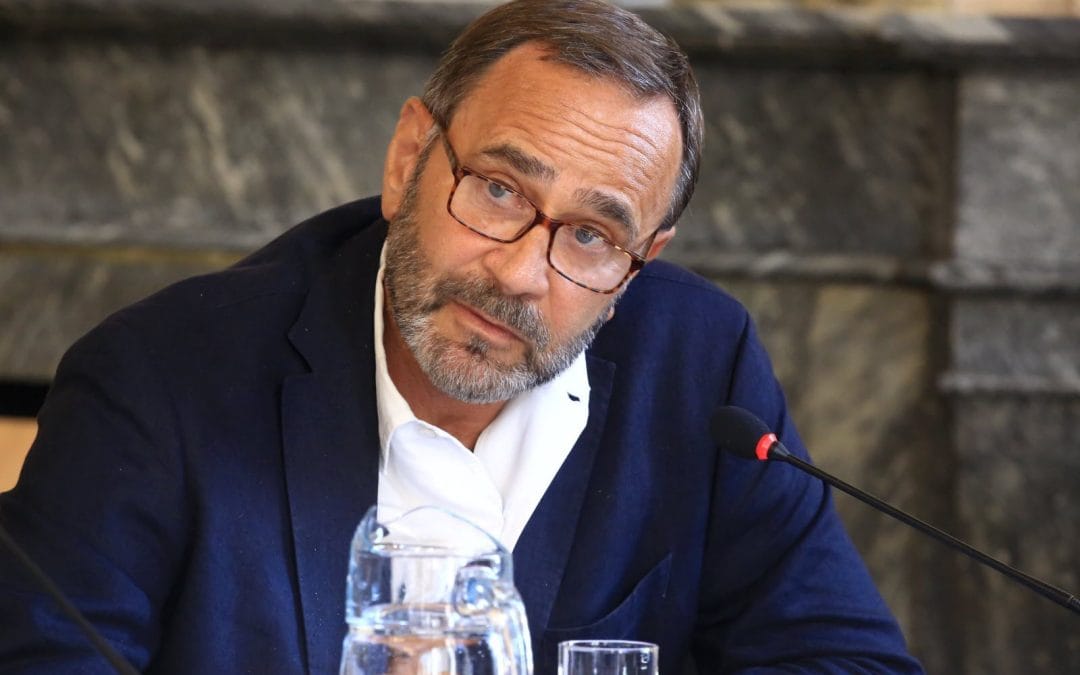
Raphaël Pitti, founder of the NGO HuSoMe (Humanité, Solidarité, Médecine), is an anaesthesiologist and intensive-care physician and an expert in war medicine. Back from a mission on the Ukrainian border in the Carpathians, and deeply involved in Gaza, he speaks with force and conviction in Le Grand Entretien on RCF. He also looks back at the controversy over his appearance on the programme Quelle époque !, and announces a major spiritual project for August 2025 in the Ukrainian Carpathians.
Words that disturb, a testimony that challenges
Invited by Léa Salamé onto the programme Quelle époque !, Raphaël Pitti did not expect such media resonance. Although it was broadcast late in the evening, the programme caused a considerable stir, amplified by Thierry Ardisson’s controversial reaction comparing the situation in Gaza to Auschwitz. In the face of this controversy, Pitti remained measured and refocused the debate on the humanitarian realities he observes on the ground.
A territory besieged, starved, bombed
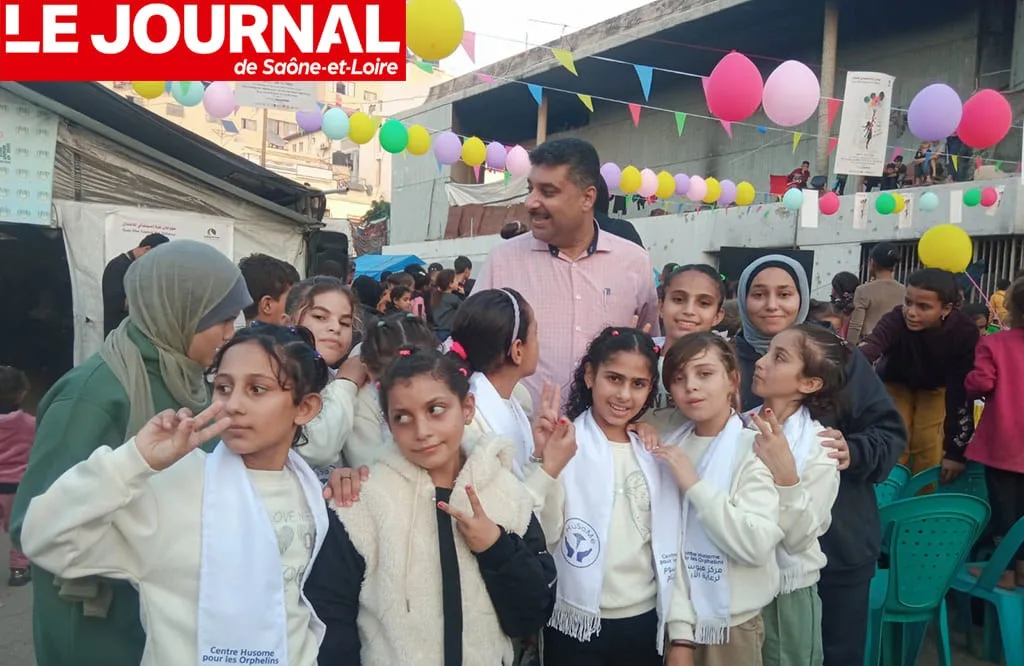
HuSoMe’s five health centres are trying to respond to the health emergency: drinking water distribution, fighting child malnutrition, basic medical care. But given the scale of the crisis, these efforts are struggling to contain the catastrophe.
“Before 2 March, 60% of children were already at level 3 out of 5 of malnutrition. Level 5 is famine.”
The teams use mid-upper arm circumference, a proven method for measuring the severity of malnutrition. The situation is all the more dramatic as the total blockade imposed by Israel deprives the population of water, electricity, food and medicines.
And while hopes of a ceasefire seemed real during the prisoner exchanges, the Israeli army resumed bombing in the middle of the night, striking areas where civilian refugees were sheltering in tents: 400 dead in a few hours.
Official figures underestimated
The 54,000 deaths recorded in Gaza are probably well below the reality. These figures are based on hospital admissions, the hospital being the only place where deaths can be registered administratively.
“There is no town hall, no civil registry. Families go through the hospitals to obtain a death certificate.”
But what about those buried under the rubble, the missing who are never found, or patients who die for lack of treatment for chronic diseases? Diabetics, heart failure patients, dialysis patients: thousands do not survive the collapse of the health system.
“There are the direct deaths: drones, snipers, bombardments. And the indirect deaths, which are too often forgotten.”
The weight of words, the silence of the powers
Raphaël Pitti’s television appearance sent shock waves, notably because of Thierry Ardisson’s remarks about Auschwitz. But according to Pitti, the real scandal is the inaction of Western governments.
“The United States vetoes humanitarian resolutions. Europe still funds Russia through gas. France condemns… but does nothing.”
He deplores a widespread moral collapse. He quotes the philosopher Hannah Arendt:
“As soon as empathy disappears, it is the end of humanity.”
At a time when Israeli officials make radical statements — going so far as to talk of killing all the children of Gaza on the pretext that they will become terrorists — Pitti denounces the total absence of compassion.
“It is a moral bankruptcy. What has become of the religion of justice, love and compassion?”
A committed faith, hope in young people
Beyond the humanitarian emergency, Raphaël Pitti is a man of faith. A practising Catholic, he also carries out spiritual initiatives in Ukraine. On his last stay, he organised a week-long retreat in an Orthodox monastery in the Carpathians, on the model of Taizé.
“We prayed, reflected and discussed themes such as democracy, freedom, justice and spirituality. Young Ukrainians took part.”
The initiative will be repeated in August 2025, and he is calling on young French people to join this gathering to build bridges between peoples.
Ukraine: a war of attrition, a silent emergency
Raphaël Pitti does not forget the war in Ukraine, where HuSoMe has been training health workers and surgeons in war medicine for three years.
“More than 7,700 Ukrainian health workers have been trained, including 450 surgeons. We work near Kharkiv, in Lviv and on the front line.”
The situation there is just as trying: a static war, constant bombardment, post-traumatic stress, drug use… The war drags on, with no clear prospect of peace. He castigates Western wait-and-see policies and calls for a reaction.
Speaking freely despite threats
Since his widely publicised appearance, Raphaël Pitti has been the target of many attacks, including death threats. But he refuses to be silenced.
“I am a humanitarian doctor. My duty is to treat and to bear witness. I support neither Hamas nor any armed force. I speak in the name of international humanitarian law.”
He insists: Médecins Sans Frontières, Médecins du Monde and other NGOs say the same thing as he does. If he is heard more, it is because the spotlight has turned on him.
A call to action
On RCF, he appeals to the youth of the 21st century, whom he considers better able to build a new world. He condemns the hypocrisy of leaders, particularly in Europe, and calls for concrete measures:
- Suspension of the EU–Israel partnership agreement for failure to respect human rights.
- Recognition of the State of Palestine.
- A humanitarian ultimatum: 72 hours to reopen the corridors into Gaza, on pain of sanctions.
“Let your yes be yes and your no be no. But this hypocrisy is unbearable.”
Conclusion: between indignation and hope
Raphaël Pitti embodies a committed humanism, clear-sighted but carrying hope. His dual grounding — humanitarian fieldwork and spirituality — allows him to carry a powerful message. By appealing to young people, to Europe and to active faith, he reminds us that even in the darkness of conflict, there are still voices to light the way to the future.