A community kitchen in Nertiti, Darfur
In Sudan, the war has forced millions of people from their homes, and central Darfur is among the areas where access to food is most degraded.
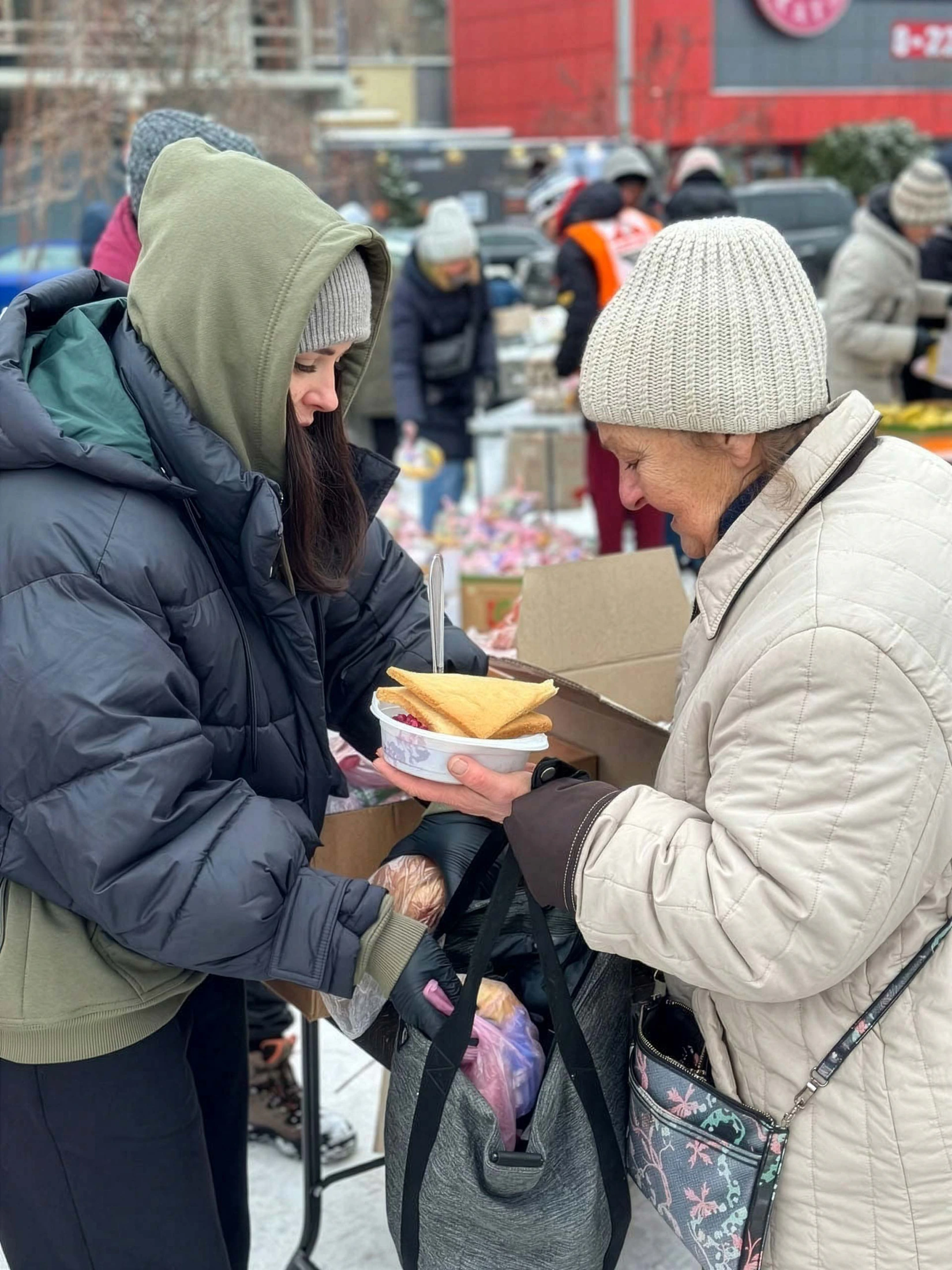
HuSoMe teamed up with the Voice of Justice for Peace and Development Organization to open a community kitchen in Nertiti for schoolchildren and displaced people. 350 meals and food parcels are distributed there every day, over an operation lasting ten consecutive days.
It is a time-limited operation, and it is presented as such: it responds to a peak in need; it does not set up a permanent service.
A food convoy to Lviv
In July 2026, a solidarity convoy left Moselle for HuSoMe’s hub in Lviv, Ukraine: 30 pallets of essential donations. Part of the load was medical equipment for hospitals being rehabilitated in the east of the country; the rest was hygiene and cleaning products and food.
Transport was made possible by the Banque Alimentaire de Moselle (Moselle Food Bank), which mobilised its logistics alongside the association.
Five hundred parcels for the widows of Gaza
For Eid, in May 2026, HuSoMe distributed 500 festive food parcels to widowed women and their children living in the camps of Gaza. Each parcel was worth €60, i.e. €30,000 committed to this operation alone.
These parcels met an essential need, but not only that: they also aimed to give back a day of celebration to families who no longer have any.
Parcels for displaced families in Lebanon
During the escalation of March 2026, one million people were displaced in less than a week, in a country where 80% of the population already lived below the poverty line. Basic resources — water, food, baby milk — are running out.
HuSoMe supports Amel Association International, a Lebanese NGO rooted in the country, in purchasing and distributing essential goods. The food parcel is one of six kits distributed, alongside the emergency bedding kit, the hygiene kit, the intimate hygiene kit, the shelter cleaning kit and the psychosocial support kit.
In Gaza, malnutrition is also a matter of care
In Gaza, the famine declared in 2025 made nutrition a central part of the medical response, rather than a separate activity.
Screening relies on measuring mid-upper arm circumference, carried out at every medical point, and on distributing ready-to-use therapeutic food supplied by UNICEF. The moderate malnutrition that affected most of the children followed before 2025 became severe from 5 March onwards.
The thirty-five children at the Orphans’ House receive three meals a day — the only place in our programmes where food is daily and guaranteed.