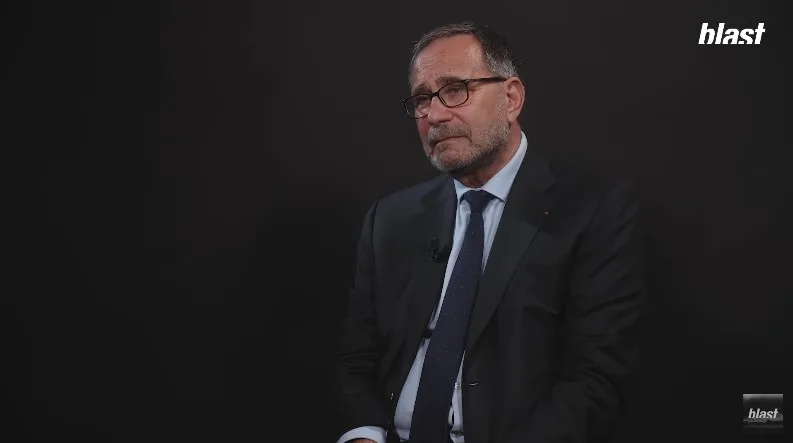
Since 7 October, Gaza has been the scene of a humanitarian catastrophe on an unprecedented scale. An experienced humanitarian doctor, Dr Raphaël Pitti has travelled to Gaza twice, notably to the city of Rafah, and witnessed a dramatic situation. In a harrowing testimony given to BLAST, he describes the population’s inhuman living conditions and the collapse of the health system, and raises the alarm.
A hospital turned makeshift shelter
Thousands of civilians taking refuge
At the European Hospital in Rafah, more than 25,000 displaced people are camping around the facility. Inside, 3,000 refugees live in the corridors and stairwells, improvising private spaces with sheets torn from the rooms.
Care has become impossible
The most seriously wounded are left untreated for lack of resources: no oxygen, equipment, medicines or morphine. Triage is reversed: the most urgent cases are abandoned in favour of those considered “saveable”.
The health catastrophe in figures
- A hospital designed for 400 beds, occupied by 900 patients.
- Operations carried out on a production line, with no post-operative follow-up.
- Massive bone infections, repeated amputations.
- Minor conditions turned deadly for lack of equipment (e.g. the diabetic coma of a 24-year-old woman, who died with her stillborn child).
Rafah, a prison city for a population in distress
The population was forcibly displaced to Rafah, believing it to be a “safe zone”. In reality, they live in dehumanising conditions: no water, no food, no care, and no decent shelter.
“There is something worse than death: depriving someone of their dignity.”
The impossible return to France
Raphaël Pitti speaks of the psychological violence of coming back: as a direct witness, he feels obliged to tell what he saw, without being able to step back. He stresses the importance of bearing witness, because “no one will be able to say they did not know”.
French diplomacy judged inadequate
Support from the Foreign Ministry
The Crisis Centre of the French Ministry of Foreign Affairs recognises the humanitarian emergency and provides financial support to NGOs.
Political inaction
Politically, the government remains silent, confining itself to statements without concrete action. Dr Pitti calls for strong measures:
- Recalling the ambassador
- Diplomatic and economic sanctions
- Holding Israel to account
Gaza compared with the worst humanitarian tragedies
Drawing on his missions in Syria and Ukraine, Raphaël Pitti states that he has never seen such a level of destruction and entrapment of a civilian population. He speaks of a “green zone” turned ghetto, tragically recalling that of Warsaw.
The origins of his commitment
Born in Algeria and a refugee in France after independence, he experienced exile, poverty and humiliation first-hand. His humanitarian commitment is rooted in this personal experience.
“We share one and the same humanity.”
Conclusion: an appeal to the collective conscience
Raphaël Pitti sounds the alarm to young people and citizens of the world:
- Immediate mobilisation against the massacre in Gaza
- Absolute refusal to normalise violence
- Unconditional respect for human rights
“Never again. Not in the 21st century. Let us not let it happen.”