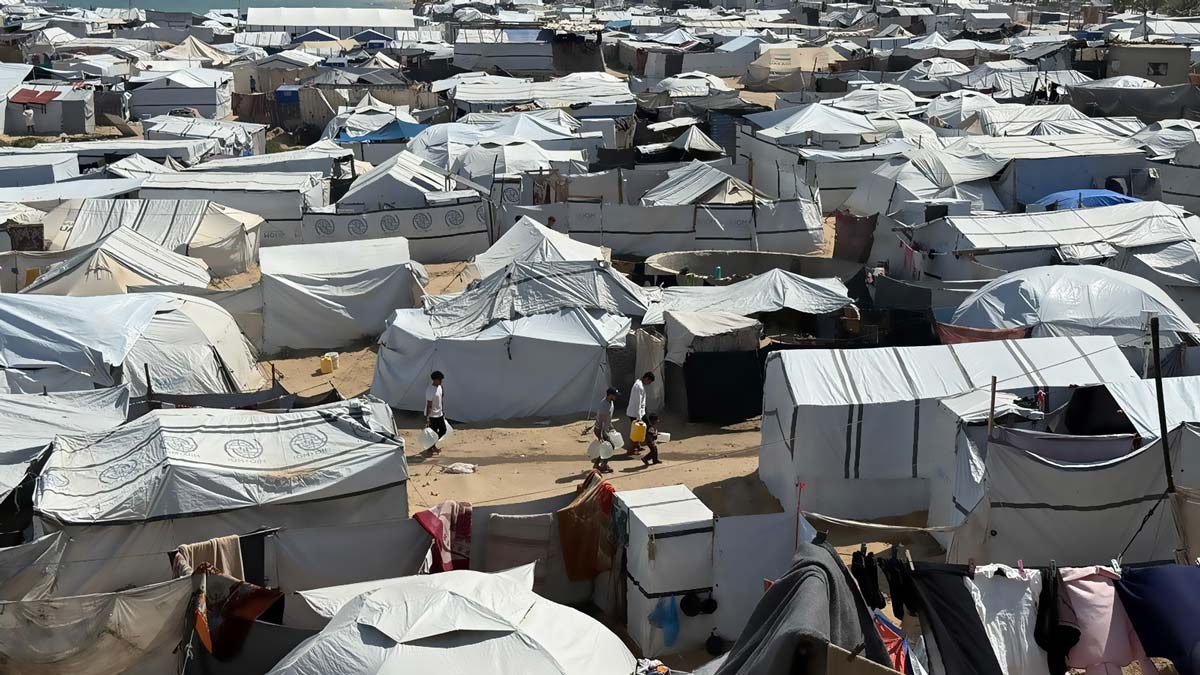
A collapsed health system
More than two million people depend on humanitarian aid to survive. The health system is largely destroyed and overwhelmed. From March 2025, famine set in. According to the Palestinian Central Bureau of Statistics, more than 39,000 children have lost one or both parents.
Operating conditions were particularly difficult: active war, complete closure of the crossing points, severe restrictions on financial transfers.
Drinking water distribution
The collapse of the public networks has left access to water structurally inadequate. HuSoMe distributes 22 cubic metres a day, i.e. 22,000 litres, to more than 1,000 families — around 5,500 people. Distribution covers the north, centre and south of the Strip.
The project ran without interruption throughout the year, first with HCDA, then directly through the Senabil association.
Medical points
The medical points are the core of the organisation’s health set-up in Gaza. It grew from a single care point in Nuseirat to four self-funded points — Nuseirat, Deir al-Balah, Mawasi and Khan Younis. Each point saw on average one hundred patients a day in 2025.
Services include general medical consultations, nursing care, wound dressing, emergency care, sexual and reproductive health provided by an obstetrician-gynaecologist, treatment for malnutrition, participation in vaccination campaigns and free dispensing of medicines.
The conditions treated are dominated by respiratory infections, fuelled by overcrowding in the camps, skin diseases and gastrointestinal illnesses. Hypertension and diabetes account for a significant share of consultations and raise the challenge of continuity of care. Medicine coverage reached about 88% of patients.
Two complementary services are attached to them: childhood vaccination, in Nuseirat and Deir al-Balah, with the Palestinian Ministry of Health and UNICEF; and malnutrition screening at every point, by measuring mid-upper arm circumference and distributing ready-to-use therapeutic food supplied by UNICEF.
The Orphans’ House
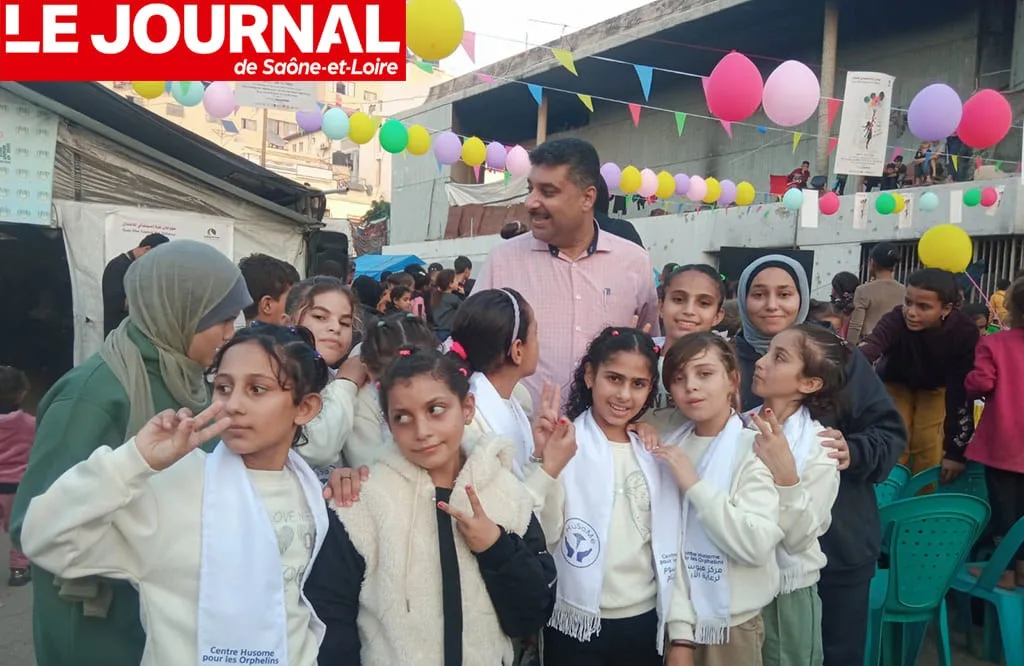
The project responds to a phenomenon that has become widespread since October 2023: children who are the sole survivors of their families, having lost their entire close family. These children need immediate shelter, but also long-term trauma, social, educational and medical follow-up.
Prepared from 10 July 2025, the project took in its first children on 1 August — less than a month later, amid war, famine and closed crossing points. The house, in a relatively safe area of al-Nuseirat, is home to 35 children.
They receive secure housing, three meals a day, continuous medical follow-up, care from carers trained in psychological trauma, educational support and activities. The team includes a full-time psychologist and a part-time lawyer. The full care of one child costs around €1,000 a month.
“One thing is certain: I will never agree to close the orphanage.”
— Pr Raphaël Pitti
Yafa hospital emergency department
Pressure on emergency departments has reached unprecedented levels, and many hospitals can no longer provide full cover, especially in the evening. With the Senabil Foundation and Yafa hospital in Deir al-Balah, HuSoMe funds the running of the emergency department during the night shift, six days a week.
The contribution covers only the salaries of seven people: two emergency physicians, three nurses, a medical supervisor and a maintenance worker. The department sees around seventy patients a night.