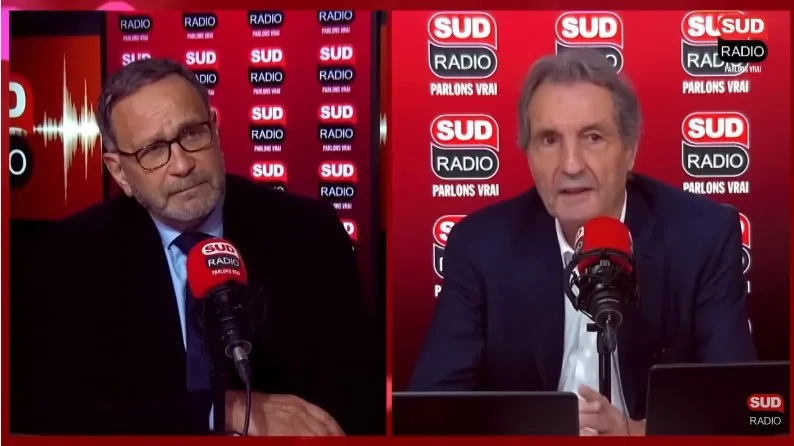
A humanitarian doctor facing the unspeakable
Dr Raphaël Pitti, humanitarian doctor, professor of medicine and former military doctor, has returned from a 15-day mission in the Gaza Strip. Invited by Jean-Jacques Bourdin on Sud Radio, he gave a striking testimony on the situation on the ground. Back on 6 February 2024, he described the dramatic living conditions of civilians, the saturation of hospitals and the impossibility of respecting the principles of humanitarian medicine.
A difficult entry into Gaza: a political and humanitarian battle
Although he wanted to go as early as October 2023, Dr Pitti was only able to enter Gaza in February 2024, thanks to an American medical mission that had obtained permission from Israel and Egypt. No international NGO had been allowed in until then, a situation denounced by an unprecedented coalition of 15 major NGOs including Médecins Sans Frontières, Médecins du Monde and Oxfam.
The European Hospital in Khan Younis: a symbol of chaos
During his mission, Raphaël Pitti was based at the European Hospital in Khan Younis, built by the European Union. This 400-bed facility holds more than 900 patients and is surrounded by 25,000 displaced people living in makeshift shelters. The corridors are full of refugee families, sheets hung from the ceilings serve as partitions, and the seriously ill lie alongside the dying, sometimes without sedation or morphine.
War medicine: amputations and triage for death
Faced with a massive influx of wounded, often shot in the head by snipers or suffering injuries from bombardment, the medical team is forced to amputate quickly or let the most serious cases die. For lack of resources, it is impossible to stabilise patients before transfer: everything is done on the spot, in a hurry. Dying patients are left without sedation, for lack of morphine.
“I saw patients with head injuries left to die without palliative care. It’s the first time I’ve seen that in 30 years of humanitarian missions.”
A population in survival mode: shanty towns, hunger, riots
Around the hospitals, 1.3 million refugees live in undignified conditions: makeshift shelters, unsanitary conditions, lack of water, queues for bread or flour, and soaring prices. Humanitarian aid, though it exists, is insufficient and hard to access. The slightest quarrel degenerates into a riot, a sign of extreme tension.
A harrowing parallel: “It is like the Warsaw Ghetto” The doctor’s description evokes a striking image: that of the Warsaw Ghetto, with its starving, idle populations deprived of dignity. An attack on Rafah would, in his view, mean total humanitarian catastrophe.
“If they bomb Rafah, we can speak of a programmed massacre.”
An alarm call to the international community Raphaël Pitti directly challenges President Emmanuel Macron and French diplomacy. He calls for a clear humanitarian stance, grounded in the values of human rights.
“There is something worse than killing: taking away people’s dignity.”
Conclusion: a duty of remembrance and action Dr Pitti’s testimony reveals the scale of the humanitarian tragedy under way in Gaza. More than an account, it is a call to react, document, intervene. Through this mission, he reminds us that humanitarian neutrality does not rule out ethical speech in the face of the unspeakable.