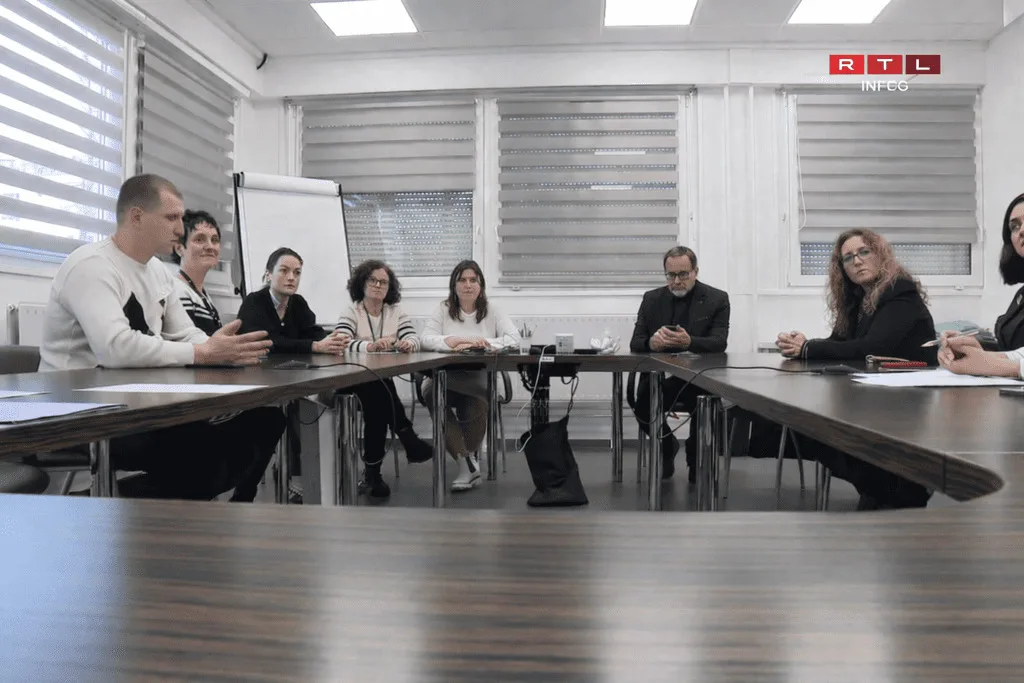
NANCY, France — In a report broadcast by RTL Info, the newsroom looked at an initiative led by the NGO HuSoMe: the training of Ukrainian doctors in a virtual hospital in Nancy. The report highlights the association’s central role in transferring medical skills in a context of war.
The report confirms that this training, held at the Faculty of Medicine in Nancy, is a first in France. It is based on simulation-based teaching, a key tool for training health workers who will have to work in extreme emergencies, without exposing real patients.
RTL Info recalls that this initiative grew out of HuSoMe’s field experience in conflict zones. Raphaël Pitti, humanitarian doctor and founder of the NGO, explains the reasons for this commitment:
“We knew how they operated in Syria, the terror they inflicted on the population.”
It was precisely this knowledge of the practices of war and their medical consequences that led HuSoMe to offer a response based on training rather than one-off intervention. The report stresses that the aim is to give Ukrainian doctors lasting tools, which they can then pass on in turn.
According to RTL Info, simulation-based training is a response suited to the current constraints of the Ukrainian health system, severely weakened by the conflict. Seven teaching doctors from Lviv were trained so that they can reproduce this model in Ukraine.
Raphaël Pitti explains in the report:
“We told ourselves that we could contribute something by training our friends.”
The report also gives a voice to the direct beneficiaries of this cooperation. Nataliia Drobinska, associate professor at the University of Lviv, speaks of the importance of this experience: “We feel very lucky to be invited to this country. It is a very great opportunity for me.”
RTL Info pointed out that this action is part of HuSoMe’s broader commitment in Ukraine, notably through the development of war medicine training centres in Lviv and Kharkiv, close to the Russian border.
Finally, the report concludes that this initiative illustrates a humanitarian approach based on passing on knowledge and empowering local teams — a strategic focus HuSoMe has championed since its creation: training in order to treat better, today and tomorrow, at the heart of conflict.