From 17 to 26 April, Professor Raphaël Pitti travelled to Lviv, Ukraine, to continue developing war medicine training as part of the work of the NGO HUSOME.
Strengthening local autonomy in Lviv
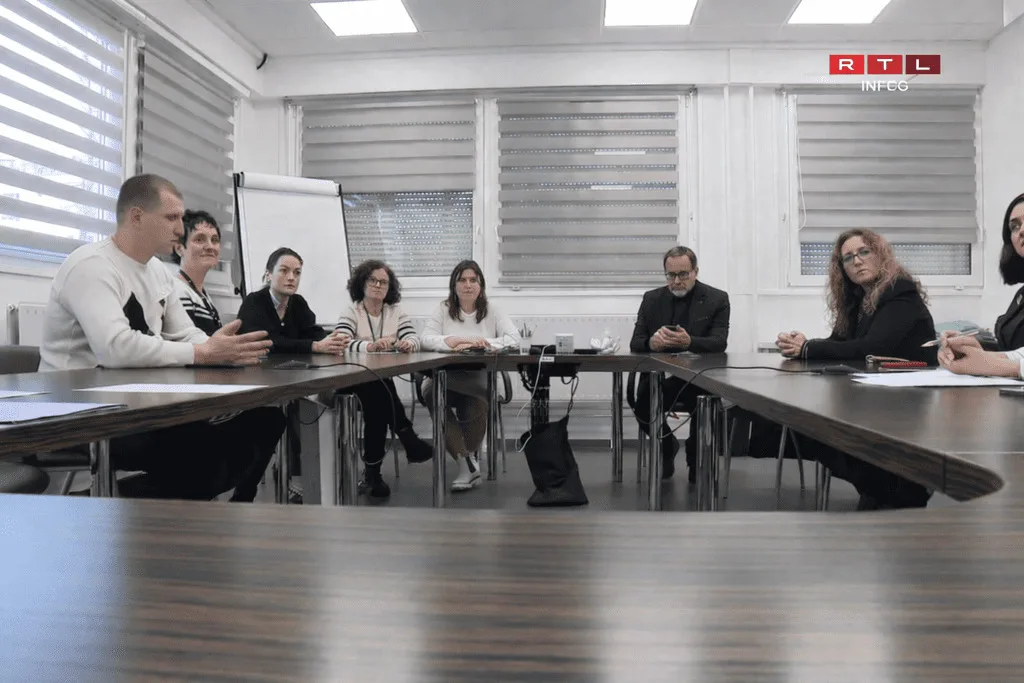
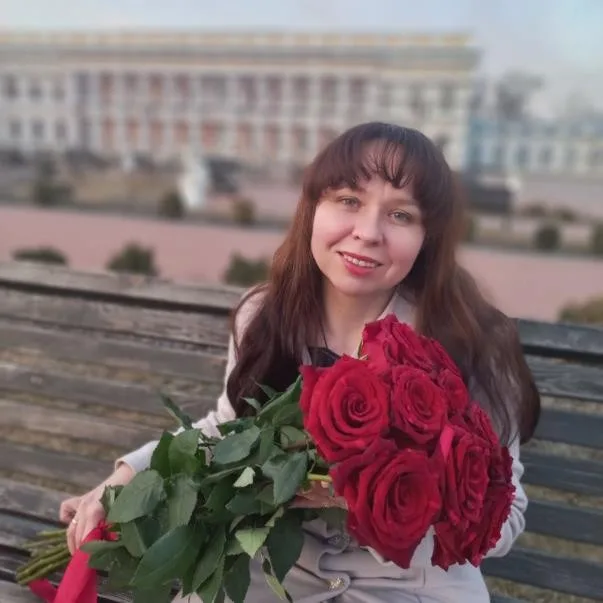
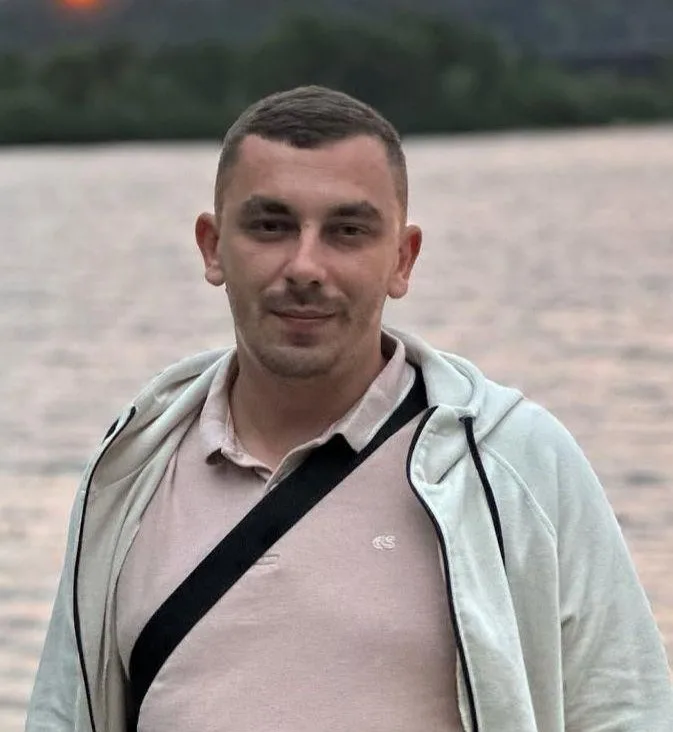
During this mission, a new training session in War Medical Techniques (ATMG) was held. Over two days, Professor Pitti trained trainers, strengthening local autonomy. In all, four trainers were trained, two women and two men.
The new trainers then delivered the course themselves to trainees, over three days. This cascade approach ensures a lasting transfer of skills and meets growing needs on the ground.
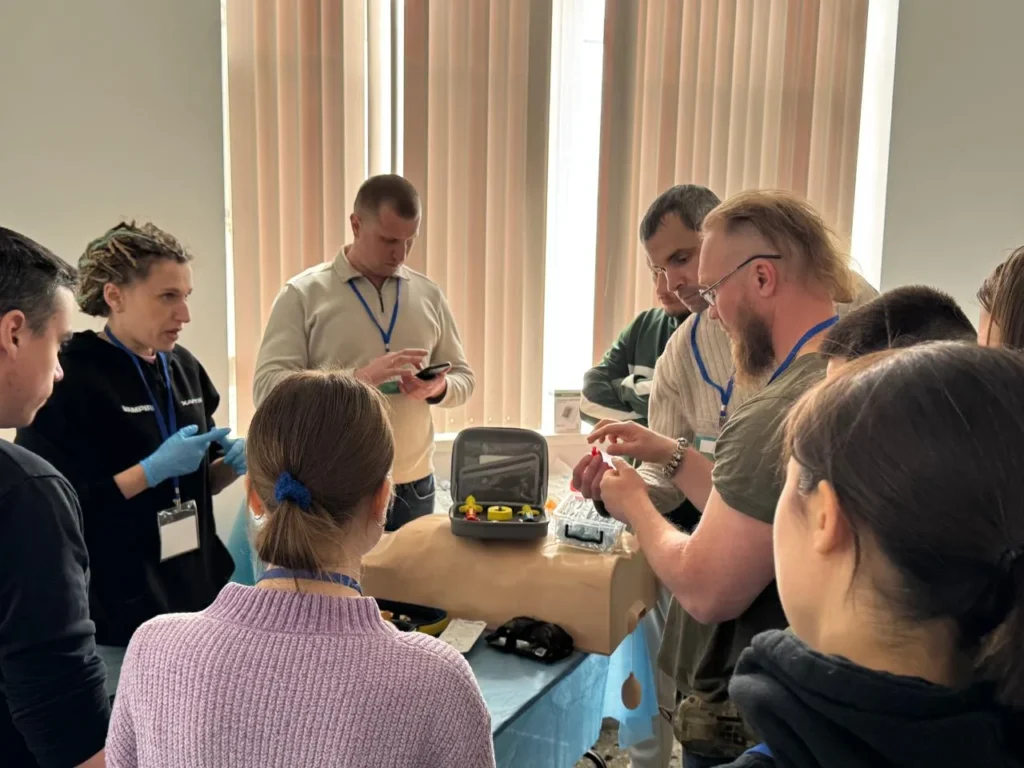
A hands-on training session in a small group around a medical manikin. Participants practise a technical procedure under supervision.
Teaching innovation: the immersive “dark room”
This training is particularly important in the current context, where the need to care for the war wounded is constant. It allows health professionals to master essential emergency procedures, directly inspired by realities on the ground.
A key feature of the course is the use of the “dark room”, an immersive teaching set-up that recreates conditions close to those of war (darkness, stress, constraints, screams). This tool encourages learning in realistic conditions and improves health workers’ ability to respond effectively.
Making the work last, in Kyiv
Three cadets from the group who took the course want to continue working with us as instructors; they all have real experience and are ready to share their knowledge.
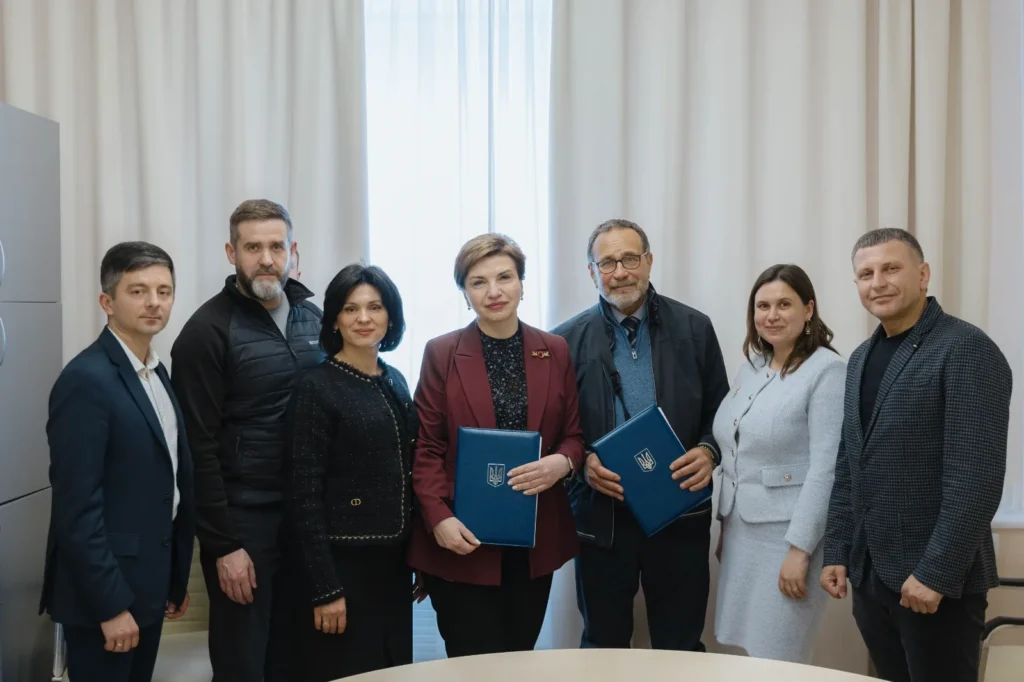
Six officials pose at an official meeting. Two of them hold folders bearing the Ukrainian emblem.
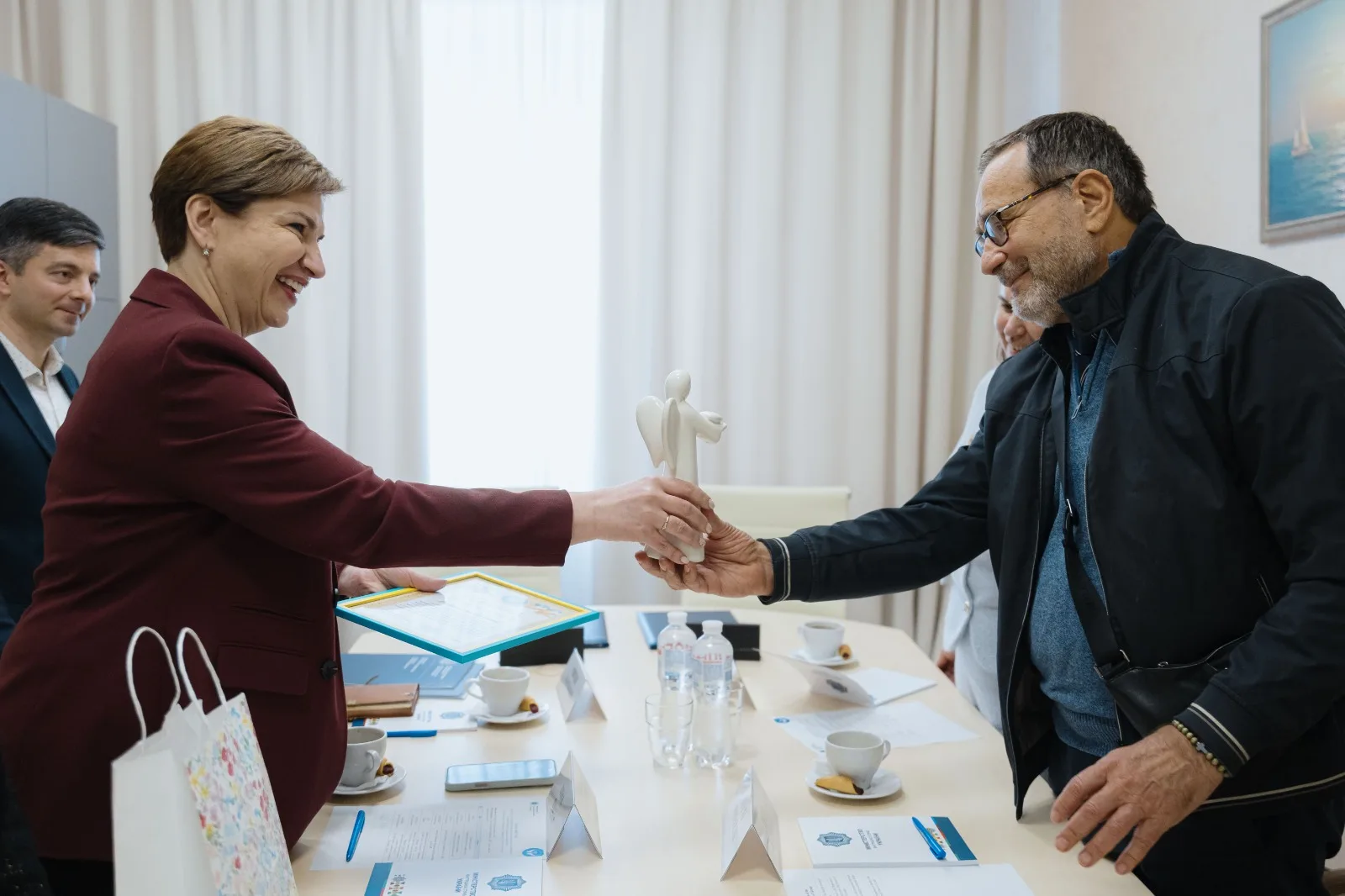
Finally, the mission continued in Kyiv with institutional meetings and the signing of agreements, aimed at strengthening cooperation and securing the future of training work in Ukraine. We signed memoranda of cooperation with the Ukrainian Military Medical Academy, the Ministry of Defence of Ukraine and the Ministry of Internal Affairs of Ukraine.
Professor Pitti also met representatives of the State Emergency Service of Ukraine (the Ukrainian equivalent of France’s Sécurité civile) to consider the first steps of a collaboration, notably in training instructors and supporting medical care.
There were also interesting discussions with a representative of the Youth Council at the Ministry of Health of Ukraine, about promising projects and possible areas of cooperation.
In our view, these various steps confirm the relevance and reach of the work undertaken, as well as the interest of several Ukrainian institutions in lasting cooperation.