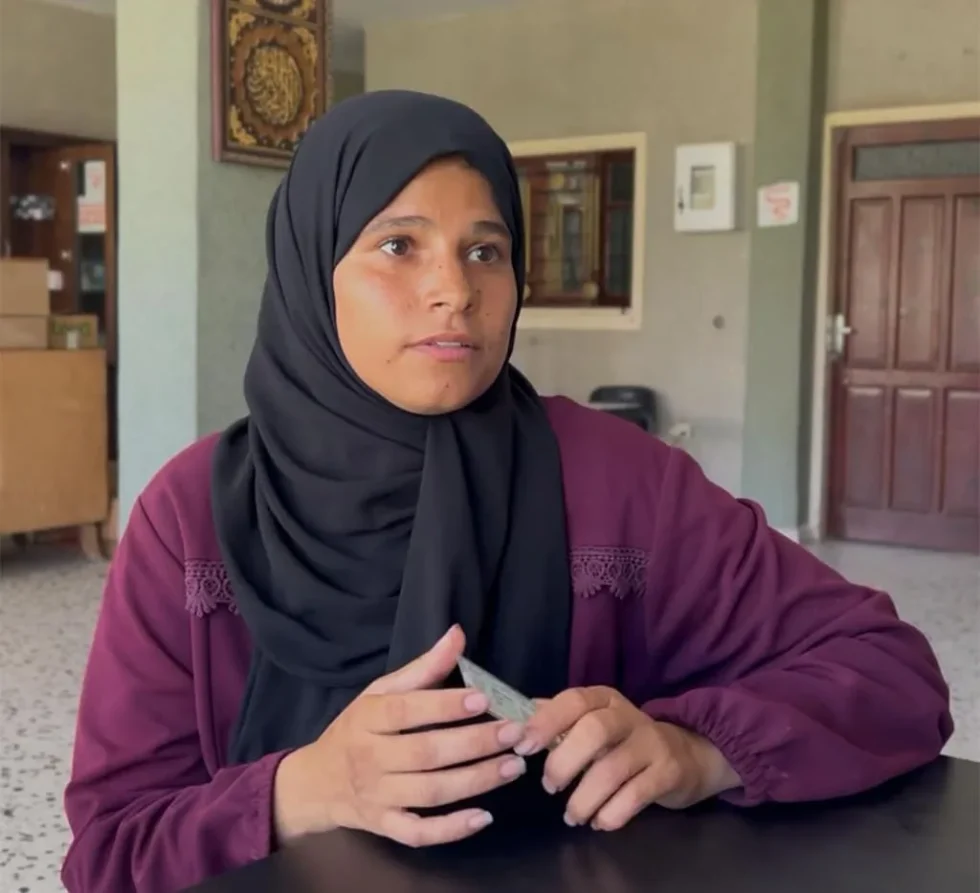
In Khan Younis, in the south of the Gaza Strip, Najat Fathy Shaqfa, 39, a mother of three children and pregnant with her fourth, saw her life turned upside down by the war. Displaced several times, she lost all access to essential antenatal services. Suffering from hypothyroidism, she was unable to have the vital tests to monitor her condition, such as TSH, T3 and T4. Worse still, the severe shortage of L-thyroxine, the medicine she depends on, plunged her into total medical insecurity. Without drinking water, without adequate food and without basic care, Najat’s health and her baby’s were in constant danger.
When she came through the doors of the antenatal clinic in her second trimester, Najat was consumed by anxiety. She feared she would not be able to carry her pregnancy to term. But thanks to the project “Emergency primary healthcare response for the population of Gaza”, a new lease of life changed the course of her story. The medical teams provided regular, free antenatal follow-up, with ultrasounds, checks of vital signs and monthly tests of her thyroid function. She received a constant supply of L-thyroxine, as well as essential supplements such as iron and prenatal vitamins.
Beyond medical care, Najat found an environment where she felt safe again. Regular consultations and psychological support eased her fears. Little by little, her health stabilised and her baby could be closely monitored, reducing the risk of complications. Despite displacement and uncertainty, this care gave her back a measure of dignity and a sense of compassion.
“At the clinic, I finally felt safe. I got the medicines I needed and the certainty that my baby was being monitored,” says Najat. “For the first time in months, I found hope again. The support I received changed everything.”
Najat’s story vividly shows how crucial it is to guarantee a rapid, appropriate primary healthcare response in Gaza.
By guaranteeing access to vital treatment and quality antenatal follow-up, this project protected the life of a mother and her child, and gave her back hope and dignity in a daily life marked by war.
Support us so that this service can continue for displaced people