“The world knows how to invest in war
It does so quickly, massively, never short of a budget. A tank costs more than a hospital. A missile, more than a school. And yet, every year, the money is found for the one, never enough for the other.
Investing in war is an investment that destroys its own raw material: human life. We fund weapons that will kill the children we could have vaccinated with the same money. It is a negative return, counted in coffins.
Investing in peace is the exact opposite. It is a well dug in Gaza rather than one more checkpoint. It is a nurse trained in Ukraine rather than one more soldier at the front. It is a health centre rebuilt in Syria rather than one more building razed. The same money, the opposite direction.
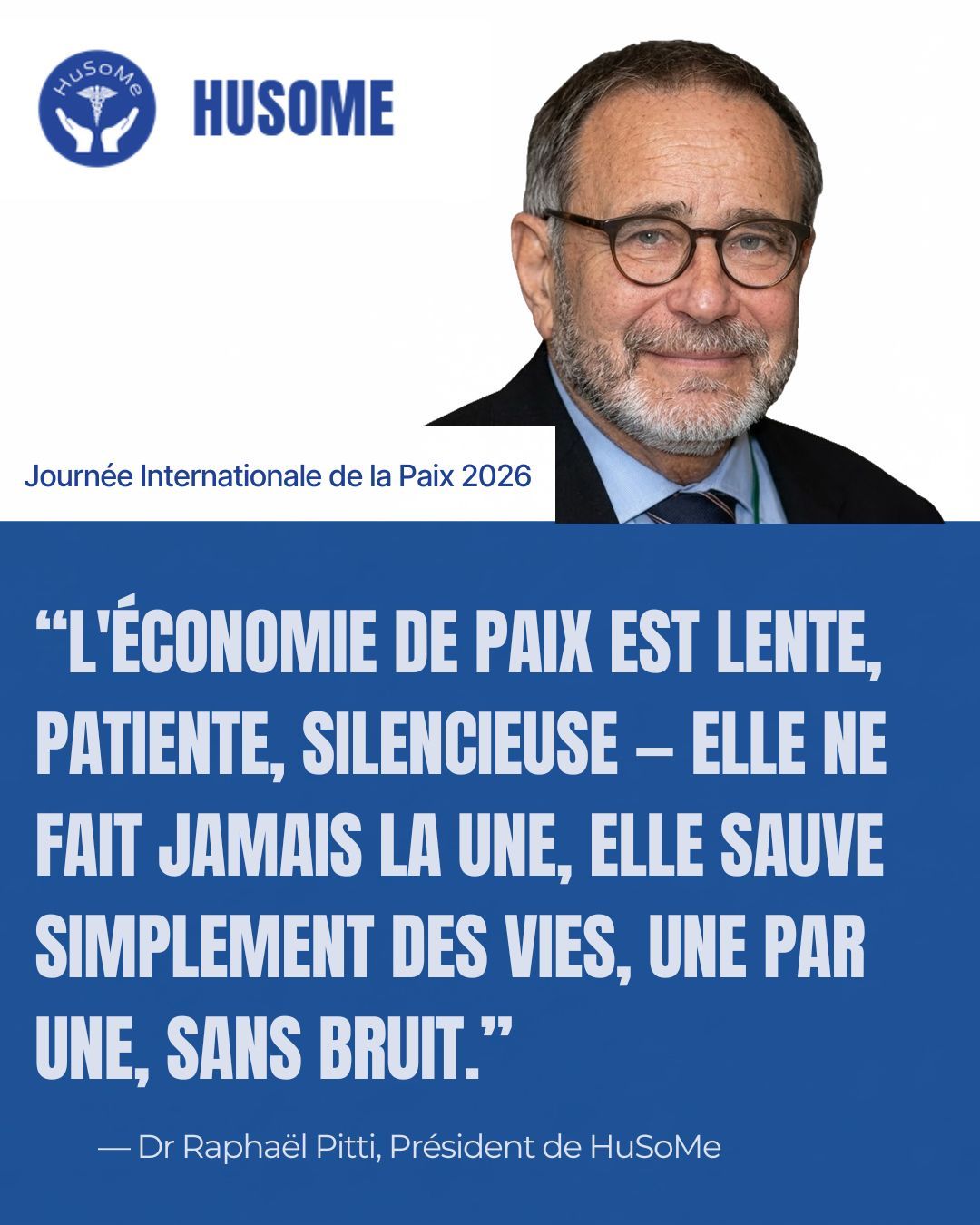
I have seen both economies at work side by side, on the same ground. The war economy is fast, spectacular, it makes the headlines. The peace economy is slow, patient, silent — it never makes the headlines, it simply saves lives, one by one, without a sound.
Investing in war is betting on fear: the more we arm, the more we must arm ourselves, in an endless spiral. Investing in peace is betting on trust: the more we heal, the more we educate, the less room hatred finds to take root.
International humanitarian law is itself an investment in peace: protecting the hospital, the ambulance, the civilian is not weakness, it is the only dyke that holds back total war. Every time it is violated, we divest from humanity as a whole.
When we are on the right path in life, every act becomes a seed. The path becomes a furrow. And one day, the seeds blossom. War sows nothing — it burns the fields.
Investing in peace means choosing what grows over what destroys.
And today, I have a dream.
The dream that just 1% of the defence budget be devoted to peace education
In France, in 2025, that 1% would have amounted to 505 million euros.
Five hundred and five million to teach children that the other, in their difference, is not a threat. Five hundred and five million to teach dialogue, listening, knowledge of cultures and religions, respect for human dignity and the non-violent resolution of conflicts.
For peace does not begin when the weapons fall silent. It begins long before, in a classroom, within a family, in the encounter with someone who is not like us. It is born when we understand that otherness does not diminish our identity, but enriches it and opens it to the universal.
Investing in peace is also investing in development. There can be no lasting peace where hunger, injustice, humiliation, the absence of care and the impossibility, for young people, of hoping for a future hold sway. Every school built, every child educated, every patient treated and every dignity restored pushes violence a little further away.
Peace also has a spiritual dimension. It begins in the depths of the human being, in that inner place where each of us chooses to welcome the other rather than reject them, to speak to them rather than confront them, to recognise their humanity rather than erase it.
The 21st century must be one of conciliation, not confrontation. Conciliation does not mean giving up on justice or accepting the unacceptable. Conciliation means preventing our differences from becoming borders, then walls, and finally battlefields.
Peace is not weakness. It demands the courage of dialogue, the strength of forgiveness and the will to build a shared future.
So yes, I have a dream: that we devote part of the means intended to prepare for war to learning peace.
One per cent.
Five hundred and five million euros to begin changing the world.”
Raphaël Pitti President of HuSoMe