TRAIN, TREAT,
DISTRIBUTE, SHELTER
What HuSoMe’s work amounted to in 2025, activity by activity, as documented in the activity report.
Accountability is part of the job. This page sets out the indicators from the 2025 activity report: how many people were seen, trained, supplied or housed, over what period and with which partners.
The figures below belong to different categories — medical consultations, training, distributions, shelter — and cannot be added together. In Gaza, they may even overlap: the same person may receive water, consult at a medical point and be referred to the night-time emergency department.
AN IMPACT THAT CANNOT BE MEASURED IN ONE WAY
Train
172 sessions and 1,878 health workers trained in war medicine in 2025 at the Lviv centre, across ten different courses.
Training in detail →Treat
Four medical points, each seeing around a hundred patients a day, and funding for the night shift at the Yafa hospital emergency department.
Care in detail →Distribute
22,000 litres of drinking water a day to more than 1,000 families, without interruption throughout the year, in the north, centre and south of the Strip.
Distributions in detail →Shelter
35 children, their families’ sole survivors, housed at the Nuseirat Orphans’ House, opened in less than a month in summer 2025.
The Orphans’ House →2025, ACTIVITY BY ACTIVITY
TRAINING THOSE WHO STAY
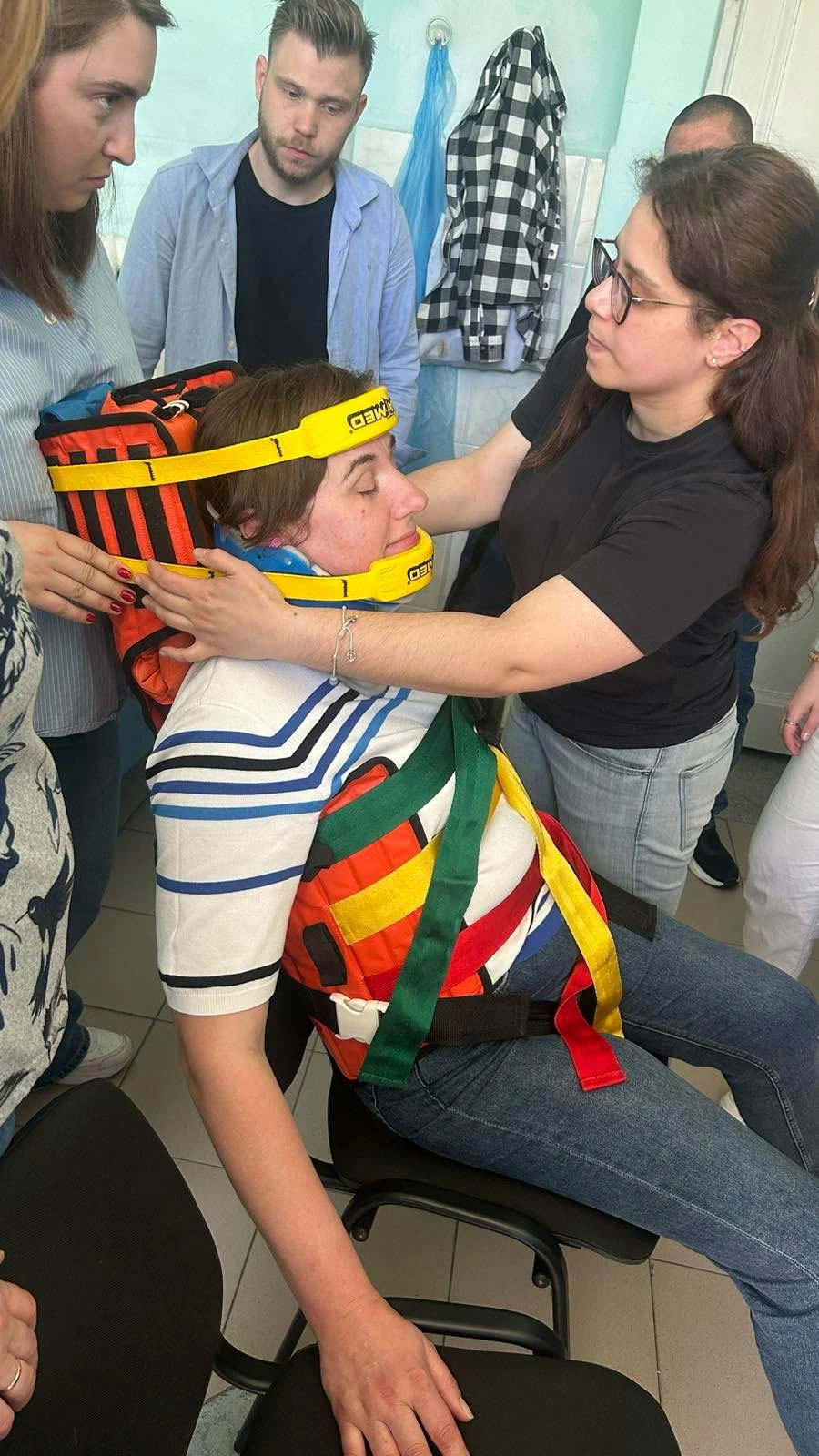
The Lviv training centre, opened in 2022 and extended in 2023 to damage control surgery, is at the heart of HuSoMe’s work in Ukraine. In 2025, it delivered 172 sessions for 1,878 health workers trained, across ten courses: damage control surgery, nursing care in combat zones, paediatric care, chemical emergency medicine, psychological care, pain management, burnout prevention.
The pace varied. January was used to set up a project funded by Expertise France; from February to May, activity exceeded 25 sessions a month; July was the year’s peak, with 32 sessions and 360 health workers trained in a single month. December saw the launch of a new ten-month training programme.
The goal has not changed since the centre opened: half of the wounded die within the first hour, from haemorrhage or asphyxia. It is these first-hour skills that the training passes on.
TREAT, DISTRIBUTE, SHELTER
Medical points. The set-up grew from a single point in Nuseirat to four primary care points (Nuseirat, Deir al-Balah, Mawasi, Khan Younis), self-funded by HuSoMe since October 2025. Each sees on average around a hundred patients a day: general medicine, nursing care, emergency care, maternal health, treatment for malnutrition, vaccination, medicines dispensed free of charge. Medicine coverage reached about 88% of patients — the remaining shortfall concerns mainly chronic treatments for hypertension and diabetes.
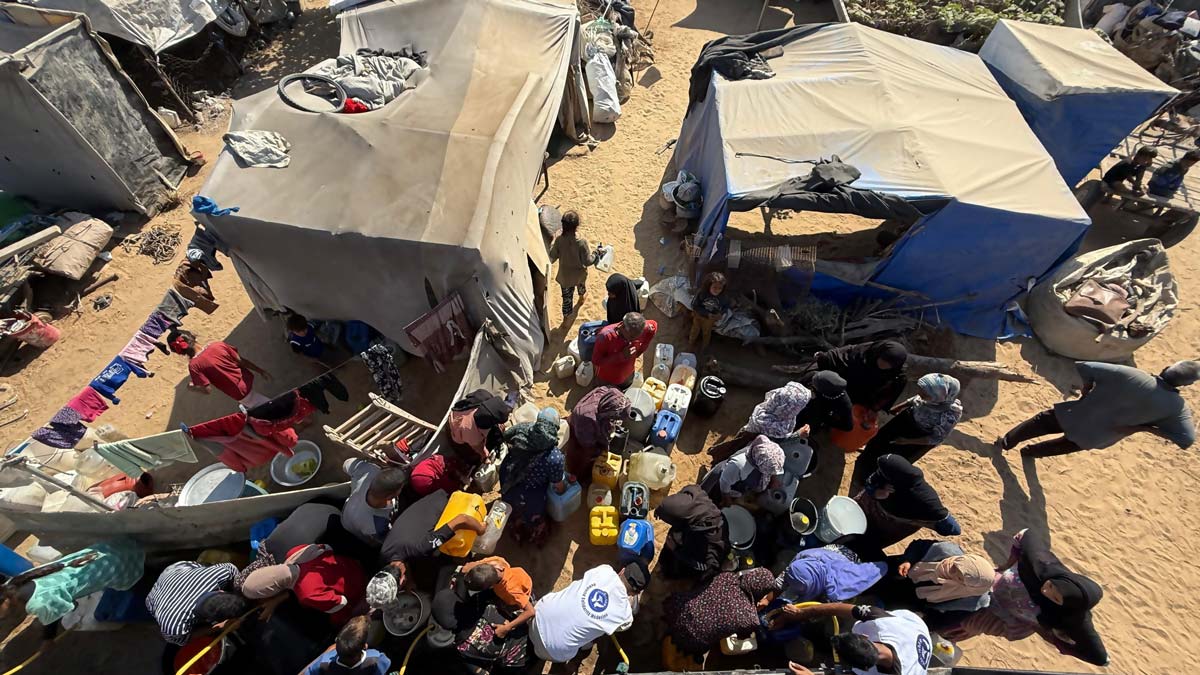
Drinking water. With the public networks collapsed, HuSoMe distributes 22 cubic metres a day, i.e. 22,000 litres, to more than 1,000 families — around 5,500 people. Distribution was not interrupted all year: 12 cubic metres in the north, 10 in the centre and south.
Orphans’ House. Since October 2023, children have been surviving alone after losing their entire close family. The project was launched on 10 July 2025 and the first children taken in on 1 August, less than a month later, in the midst of war and despite the closure of the crossing points. The Nuseirat house shelters 35 children: secure housing, three meals a day, continuous medical, educational and psychological follow-up.
Yafa hospital emergency department. Many hospitals can no longer staff night shifts. HuSoMe funds the salaries of seven staff — two emergency physicians, three nurses, a supervisor and a maintenance worker — to keep the department open at night six days a week in Deir al-Balah. Around 70 patients a night, i.e. 5,810 patients between 15 October and the end of the year.
RESTORING SIGHT, THE IBSAR PROGRAMME
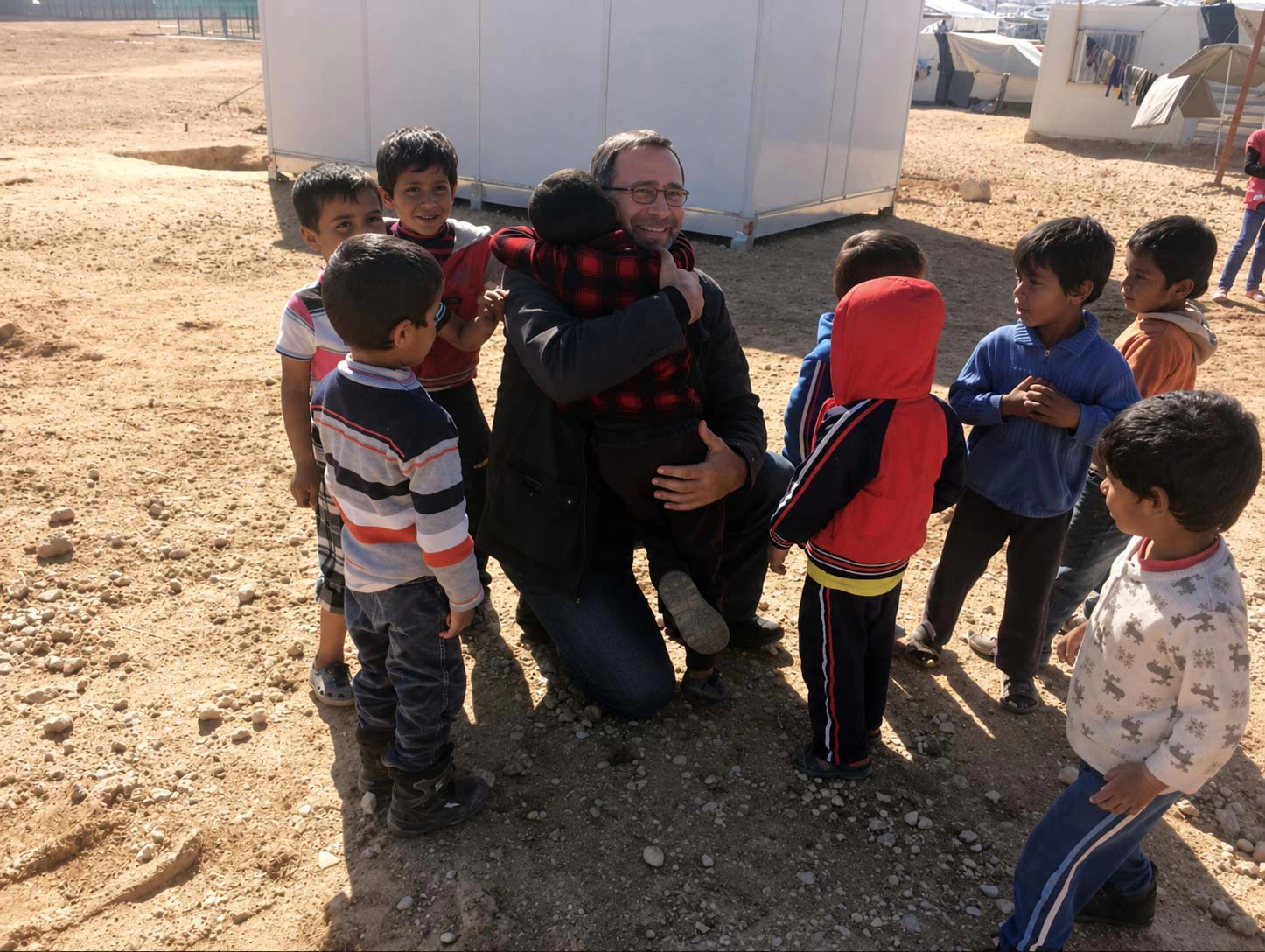
Set up in 2023 in response to the earthquakes, the Syrian operation focused in 2025 on the IBSAR eye-care programme, in the displacement camps of Deir ez-Zor and Raqqa. A first pilot phase had identified two dominant conditions there: cataracts in adults and strabismus in children.
The second round, extended to both cities, enabled 1,699 consultations and the distribution of 506 pairs of glasses — one pair per 3.4 consultations, since an examination may find no correction necessary or lead to a referral for surgery.
The review also brought a malfunction to light: some surgical procedures carried out at the hospital did not systematically benefit people in need. Selection criteria have been tightened for the third round, now in preparation.
WHAT DID NOT WORK
A review that mentioned only its successes would be of no use. Three difficulties marked the year and are recorded as they were in the report.
- In Ukraine, the collaboration with La Chaîne de l’Espoir saw repeated friction over purchases of consumables; delays sometimes led the team to borrow equipment so as not to suspend training.
- Ukrainian tax requirements meant retroactively contacting some 300 participants to collect their tax identification numbers, as accommodation and transport were considered taxable benefits.
- In Gaza, the closure of crossing points and restrictions on financial transfers made every operation heavier; in Syria, instability remains high in the areas of operation.
EVERY ONE OF THESE FIGURES CAN BE CHECKED
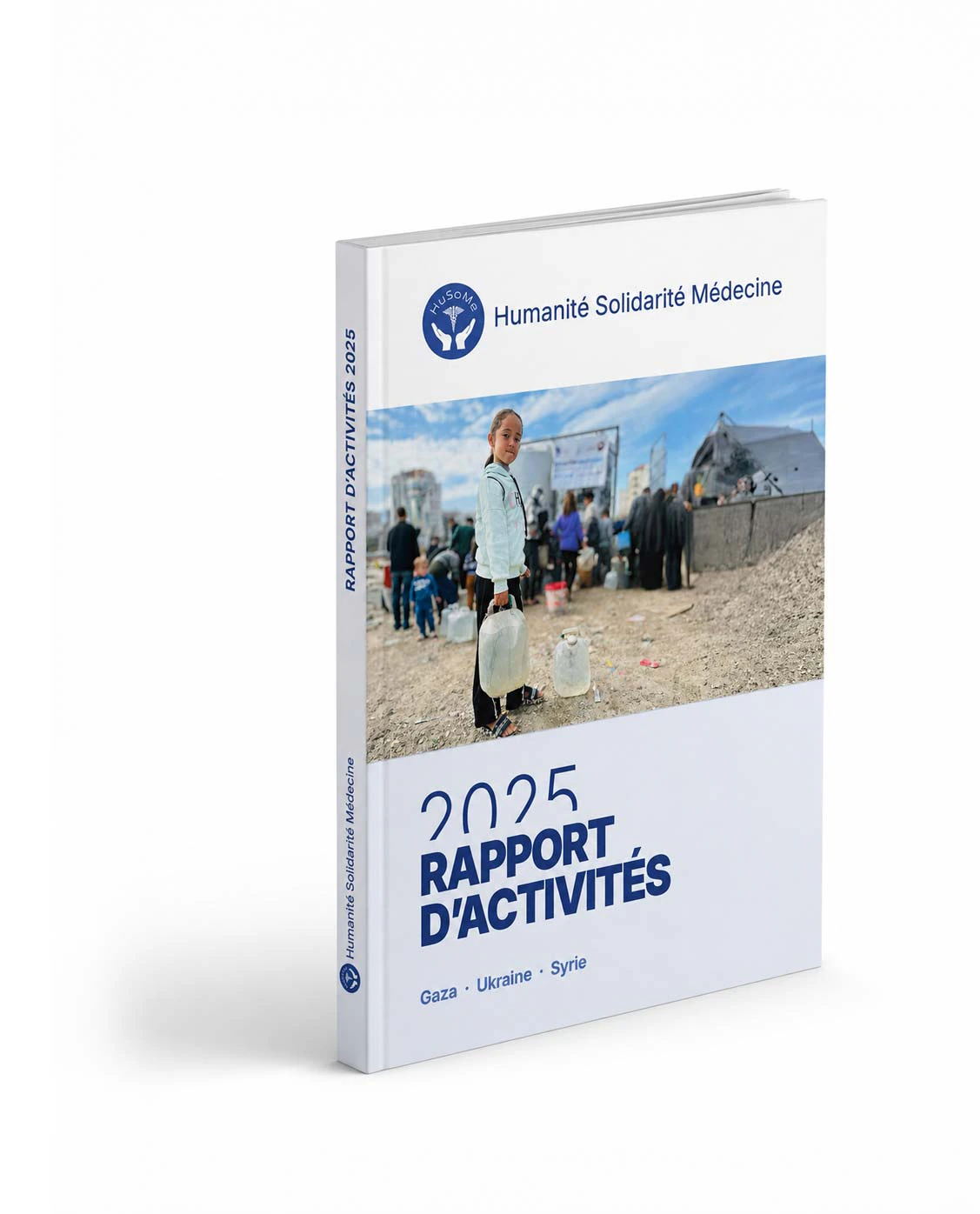
Every indicator on this page comes from the 2025 activity report, which details beneficiaries by area, training programmes, partnerships and use of funds. It can be downloaded in full (in French).